Egészség
Zene mint beavatkozás: mit mutatnak a vizsgálatok
A zene mögött több randomizált vizsgálati bizonyíték áll, mint a legtöbb wellness termék esetében. A hatások valósak és specifikusak.
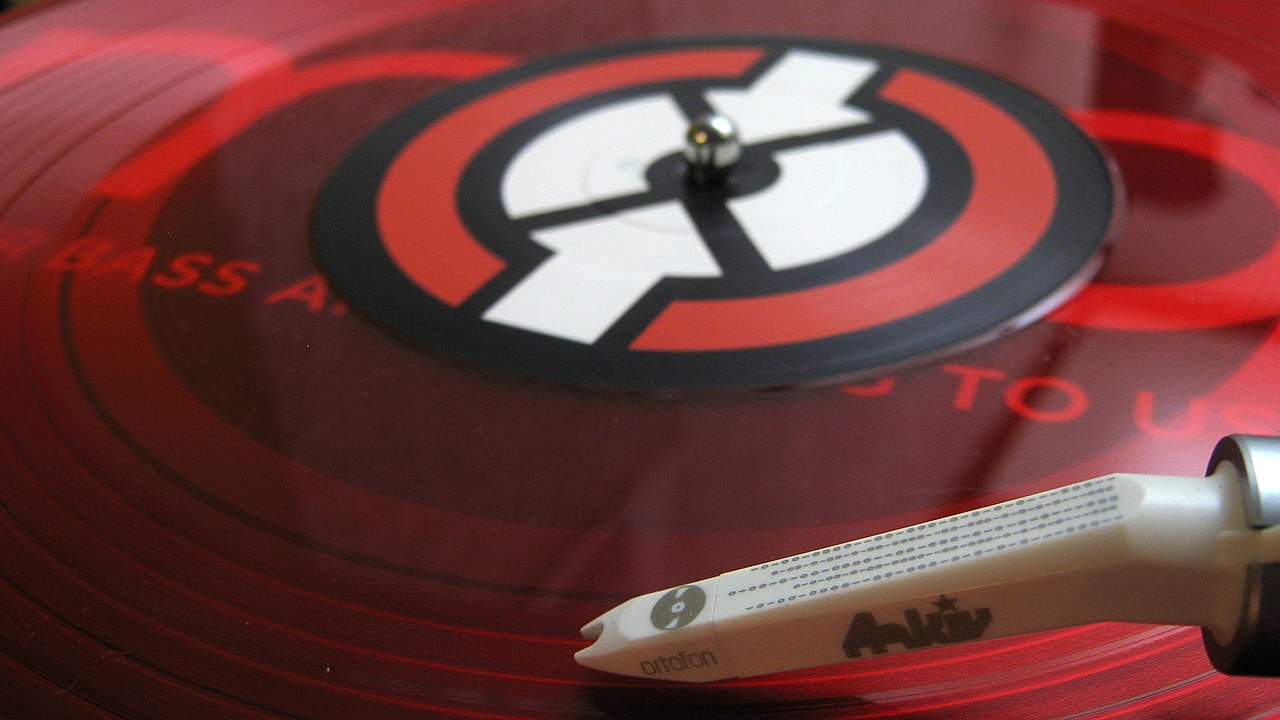

Alvás
A Cochrane áttekintés a zenéről felnőttek álmatlanságában [5] itt a legmeggyőzőbb bizonyíték. A Cochrane áttekintések építőjellegűen konzervatívak, így annak a létezése, hogy egyáltalán foglalkozik a zenével, valódi vizsgálati anyagot tükröz.
A zene nem kezelés a krónikus álmatlanságra — az a CBT-I, amelyet a sleep evidence site oldalunkon tárgyalunk. Ez egy alacsony költségű kiegészítő, amelynek plauzibilis mechanizmusa van az izgalom csökkentésén keresztül.
Zene az álmatlanságért
Testmozgás
A testmozgás irodalma az, ahol a hatások a legkonzisztensebbek. A zene sportban és testmozgásban való meta-analitikai áttekintése a teljesítmény és a pszichológiai eredmények terén hatásokat talál, és specifikus vizsgálatok foglalkoztak az anaerob teljesítménnyel és a gyors tempójú zenével. A zenei időzítés megmutatta, hogy megkülönbözteti a fáradtság észlelését, és a személyre szabott interaktív zenei rendszerek a fizikai aktivitásra meta-analizálva lettek.
A fő mechanizmus a disszociáció — a figyelem elterelése az interoceptív kényelmetlenségről — ami csökkenti a percepciós terhelést egy adott munkaterhelésnél. Ez egy valódi ergogén hatás, amelyet anélkül érnek el, hogy a fiziológiát megváltoztatnák.
| Alkalmazás | Bizonyítékok | Hatás |
|---|---|---|
| Szubmaximális állóképességi testmozgás | Jó | Alacsonyabb percepciós terhelés, hosszabb idő a kimerülésig |
| Magas intenzitású testmozgás | Mérsékelt | Kisebb hatás; az interoceptív jelek dominálnak |
| Alvás kezdet | Cochrane áttekintés [5] | Mérsékelt javulás az alvás minőségében |
| Szorongás klinikai környezetekben | Meta-analizálva [4] | Konzisztens mérsékelt csökkenés |
| Foglalkozási kiégés | Rendszeres áttekintés [3] | Előzetes |
| Neurológiai rehabilitáció | Rendszeres áttekintés [2] | Specifikus és ígéretes |
Klinikai alkalmazások
A zenei beavatkozásokat pszichológiai és fizikai eredmények javítására széleskörűen meta-analizálták [4]. A specifikusabb alkalmazások közé tartozik a nővérek kiégésének kezelése [3] és az egyoldali térbeli elhanyagolás rehabilitációja [2] — az utóbbi valóban mechanikus, nem csupán pihentető, hanem a térbeli figyelem befolyásolására használja a hallási figyelmet. A zenei neurofeedback egy fejlődő terület, amelynek saját áttekintése van [1].
Zene választása célra
- Testmozgáshoz: a tempó illeszkedjen a kívánt ütemhez, és olyan zene, amit valóban szeretsz. A preferencia lényegesen módosítja a hatást.
- Alváshoz: lassú, kiszámítható, alacsony dinamikai tartomány. Bármi, ami meglep, ellentmond a célnak.
- Fókuszhoz: ismerős és szöveg nélküli. Az újdonság és a nyelv egyaránt versenyeznek az erőforrásokért, amelyeket máshol próbálsz allokálni.
- Hangulathoz: illeszkedjen, majd váltson. Az, hogy ott kezded, ahol vagy, és haladsz, jobban működik, mint egy hirtelen kontraszt.
Gyakori kérdések
Tényleg javítja a zene az edzésteljesítményt?
Mi a legjobb tempó futáshoz?
Segíthet a zene az alvásban?
Van valóság a binaurális ütemek mögött?

Related reading
References
Every citation below links to the original peer-reviewed record on PubMed or via DOI. Nothing here is a substitute for medical advice.
-
Personalized Interactive Music Systems for Physical Activity and Exercise: Exploratory Systematic Review and Meta-Analysis Danso A, Kekäläinen T, Koehler F, et al. · JMIR human factors · 2025 · Meta-analysis DOIPubMed 40921008Full text
-
Musical Neurofeedback Advancements, Feedback Modalities, and Applications: A Systematic Review Bhavsar P, Shah P, Sinha S, et al. · Applied psychophysiology and biofeedback · 2024 · Systematic review DOIPubMed 38837017
-
A systematic review and meta-analysis of music interventions to improve sleep in adults with mental health problems Zhao N, Lund HN, Jespersen KV · European psychiatry : the journal of the Association of European Psychiatrists · 2024 · Meta-analysis DOIPubMed 39373544Full text
-
Music-based interventions for unilateral spatial neglect: A systematic review Long J, Zhang Y, Liu X, et al. · Neuropsychological rehabilitation · 2023 · Systematic review DOIPubMed 35980394
-
Association of Music Interventions With Health-Related Quality of Life: A Systematic Review and Meta-analysis McCrary JM, Altenmüller E, Kretschmer C, et al. · JAMA network open · 2022 · Meta-analysis DOIPubMed 35315920Full text
-
The Use of Music to Manage Burnout in Nurses: A Systematic Review Finnerty R, Zhang K, Tabuchi RA, et al. · American journal of health promotion : AJHP · 2022 · Systematic review DOIPubMed 35633074Full text
-
Effects of music in exercise and sport: A meta-analytic review Terry PC, Karageorghis CI, Curran ML, et al. · Psychological bulletin · 2020 · Meta-analysis DOIPubMed 31804098
-
Effect of Listening to Music on Wingate Anaerobic Test Performance. A Systematic Review and Meta-Analysis Castañeda-Babarro A, Marqués-Jiménez D, Calleja-González J, et al. · International journal of environmental research and public health · 2020 · Meta-analysis DOIPubMed 32599941Full text
-
Music interventions for improving psychological and physical outcomes in cancer patients Bradt J, Dileo C, Magill L, et al. · The Cochrane database of systematic reviews · 2016 · Meta-analysis DOIPubMed 27524661
-
Music for insomnia in adults Jespersen KV, Koenig J, Jennum P, et al. · The Cochrane database of systematic reviews · 2015 · Meta-analysis DOIPubMed 26270746Full text
-
Active music therapy reduces depressive symptoms and enhances sleep and daily-life autonomy in older adults Migliore S, Spinoso R, De Federicis LS, et al. · Clinical gerontologist · 2026 · Randomised controlled trial DOIPubMed 41423713
-
Combined effects of low-dose caffeine and warm-up music enhance male athletes' performance in simulated Taekwondo combat: a double-blind, randomized crossover trial Delleli S, Ouergui I, Messaoudi H, et al. · Psychopharmacology · 2025 · Randomised controlled trial DOIPubMed 40064697
-
Recovery effects of slow-tempo preferred music on brain activity, physiological and psychological responses following high-intensity interval exercise in healthy male adults Sreepetch S, Ramyarangsi P, Mukda S, et al. · Acta psychologica · 2025 · Randomised controlled trial DOIPubMed 40845778
-
Effects of mindfulness breathing meditation on stress and cognitive functions: a heart rate variability and eye-tracking study Hooi LY, Chen PL, Tan KW, et al. · Scientific reports · 2025 · Randomised controlled trial DOIPubMed 41136540Full text
-
Neurologic dance training and home exercise improve motor-cognitive dual-task function similarly, but through potentially different mechanisms, among breast cancer survivors with chemotherapy-induced neuropathy: Initial results of a randomized, controlled clinical trial Worthen-Chaudhari LC, Crasta JE, Schnell PM, et al. · Journal of Alzheimer's disease : JAD · 2025 · Randomised controlled trial DOIPubMed 39584292Full text
-
Effects of personalized music listening on post-stroke cognitive impairment: A randomized controlled trial Fan LP, Quijano-Ruiz A, Wang C, et al. · Complementary therapies in clinical practice · 2024 · Randomised controlled trial DOIPubMed 39098085
-
A Personalized Music Intervention in Nursing Home Residents Living With Dementia: Findings From a Randomized Study Inoue M, Ihara ES, Layman S, et al. · Journal of applied gerontology : the official journal of the Southern Gerontological Society · 2024 · Randomised controlled trial DOIPubMed 38867708
-
Music Timing Differentiates Fatigue Perception and Performance during Isometric Strength Exercises: A Crossover Randomised Trial Poon ET, Kwan WL, Chow CC, et al. · Journal of sports science & medicine · 2024 · Randomised controlled trial DOIPubMed 38455446Full text
-
Feasibility of therapeutic music listening in fibromyalgia: a randomised controlled pilot study Raglio A, Bettaglio R, Manera MR, et al. · Neurological sciences : official journal of the Italian Neurological Society and of the Italian Society of Clinical Neurophysiology · 2023 · Randomised controlled trial DOIPubMed 36334181
-
Listening to Fast-Tempo Music Improves Physical Performance in Recreational Swimmers Aburto-Corona JA, Romero-Torres JA, Montero-Herrera B, et al. · Research quarterly for exercise and sport · 2023 · Randomised controlled trial DOIPubMed 35426762
-
The effects of tempo and loudness variations during warm-up with music on perceived exertion, physical enjoyment and specific performances in male and female taekwondo athletes Ouergui I, Jebabli A, Messaoudi H, et al. · PloS one · 2023 · Randomised controlled trial DOIPubMed 37104494Full text
-
Effects of caffeine consumption combined with listening to music during warm-up on taekwondo physical performance, perceived exertion and psychological aspects Delleli S, Ouergui I, Messaoudi H, et al. · PloS one · 2023 · Randomised controlled trial DOIPubMed 37871019Full text
-
A multiple mediation analysis of the association between asynchronous use of music and running performance Kawabata M, Chua KL · Journal of sports sciences · 2021 · Randomised controlled trial DOIPubMed 32809899
-
Self-Selected Motivational Music on the Performance and Perceived Exertion of Runners Clark JC, Baghurst T, Redus BS · Journal of strength and conditioning research · 2021 · Randomised controlled trial DOIPubMed 30550400
-
Vocal music enhances memory and language recovery after stroke: pooled results from two RCTs Sihvonen AJ, Leo V, Ripollés P, et al. · Annals of clinical and translational neurology · 2020 · Randomised controlled trial DOIPubMed 33022148Full text
-
Daily music listening to reduce work-related stress: a randomized controlled pilot trial Raglio A, Bellandi D, Gianotti M, et al. · Journal of public health (Oxford, England) · 2020 · Randomised controlled trial DOIPubMed 30942385
-
Measuring the effects of listening for leisure on outcome after stroke (MELLO): A pilot randomized controlled trial of mindful music listening Baylan S, Haig C, MacDonald M, et al. · International journal of stroke : official journal of the International Stroke Society · 2020 · Randomised controlled trial DOIPubMed 30940047Full text
-
The effect of music on anaerobic exercise performance and muscular endurance Cutrufello PT, Benson BA, Landram MJ · The Journal of sports medicine and physical fitness · 2020 · Randomised controlled trial DOIPubMed 31818058
-
Bench press performance during an intermittent hypoxic resistance training to muscle failure Martínez-Guardado I, Sánchez-Ureña B, Olcina G, et al. · The Journal of sports medicine and physical fitness · 2019 · Randomised controlled trial DOIPubMed 30293408
-
Watching television or listening to music while exercising failed to affect post-exercise food intake or energy expenditure in male adolescents Livock H, Barnes JD, Pouliot C, et al. · Appetite · 2018 · Randomised controlled trial DOIPubMed 29772291
-
The Impact of Listening to Music During a High-Intensity Exercise Endurance Test in People With COPD Lee AL, Dolmage TE, Rhim M, et al. · Chest · 2018 · Randomised controlled trial DOIPubMed 29253555
-
Randomized Trial of a Group Music and Imagery Method (GrpMI) for Women with Fibromyalgia Torres E, Pedersen IN, Pérez-Fernández JI · Journal of music therapy · 2018 · Randomised controlled trial DOIPubMed 29788133
-
Music and Dementia: Individual Differences in Response to Personalized Playlists Garrido S, Stevens CJ, Chang E, et al. · Journal of Alzheimer's disease : JAD · 2018 · Randomised controlled trial DOIPubMed 29966193
-
Effects of Meditation and Music-Listening on Blood Biomarkers of Cellular Aging and Alzheimer's Disease in Adults with Subjective Cognitive Decline: An Exploratory Randomized Clinical Trial Innes KE, Selfe TK, Brundage K, et al. · Journal of Alzheimer's disease : JAD · 2018 · Randomised controlled trial DOIPubMed 30320574Full text
-
Group Music Therapy as a Preventive Intervention for Young People at Risk: Cluster-Randomized Trial Gold C, Saarikallio S, Crooke AHD, et al. · Journal of music therapy · 2017 · Randomised controlled trial DOIPubMed 28340118
-
Older Adults' Music Listening Preferences to Support Physical Activity Following Cardiac Rehabilitation Clark IN, Baker FA, Taylor NF · Journal of music therapy · 2016 · Randomised controlled trial DOIPubMed 27591761
-
Music decreases aortic stiffness and wave reflections Vlachopoulos C, Aggelakas A, Ioakeimidis N, et al. · Atherosclerosis · 2015 · Randomised controlled trial DOIPubMed 25796036
-
Attentional distraction during exercise in overweight and normal-weight boys Deforche B, De Bourdeaudhuij I · International journal of environmental research and public health · 2015 · Randomised controlled trial DOIPubMed 25782065Full text
-
Pre-task music improves swimming performance Smirmaul BP, Dos Santos RV, Da Silva Neto LV · The Journal of sports medicine and physical fitness · 2015 · Randomised controlled trial PubMed 25303170
-
Cognitive, emotional, and social benefits of regular musical activities in early dementia: randomized controlled study Särkämö T, Tervaniemi M, Laitinen S, et al. · The Gerontologist · 2014 · Randomised controlled trial DOIPubMed 24009169